
What’s the fastest safe way to remove a stuck oil filter?
The safest way to remove a stuck oil filter is to use the correct oil filter wrench, apply steady counterclockwise pressure, and avoid crushing the filter body. If it’s severely stuck, increase grip using a strap wrench or use controlled puncture only as a last resort.
Why a Stuck Oil Filter Becomes a Costly Problem
You start a simple oil change expecting a 20-minute job. Then the filter won’t budge. You try harder. It slips. You push again—now it’s dented, stuck tighter, and frustration kicks in. This is where most DIY jobs go wrong.
A stuck oil filter isn’t just annoying—it can lead to damaged threads, oil leaks, or even engine issues if handled poorly. Many people overtighten filters or use the wrong essential car tools, creating this problem in the first place.
Definition: A stuck oil filter is an oil filter that cannot be removed using normal hand force due to overtightening, heat expansion, or gasket bonding.
The good news? You don’t need brute force—you need the right mechanic tools list, proper technique, and a step-by-step approach. This guide breaks down exactly how to remove even the most stubborn oil filters without damaging your engine.
Why do oil filters get stuck in the first place?
Oil filters get stuck due to overtightening, heat cycles, and gasket adhesion over time.
Common causes of stuck oil filters
- Overtightening: Installing too tight compresses the gasket excessively
- Heat expansion: Engine heat causes metal expansion, locking threads
- Dry gasket installation: No oil lubrication leads to sticking
- Time and pressure: Long intervals between oil changes increase resistance
According to automotive maintenance studies, over 60% of stuck oil filters are caused by improper installation torque.
What tools do you need to remove a stuck oil filter?
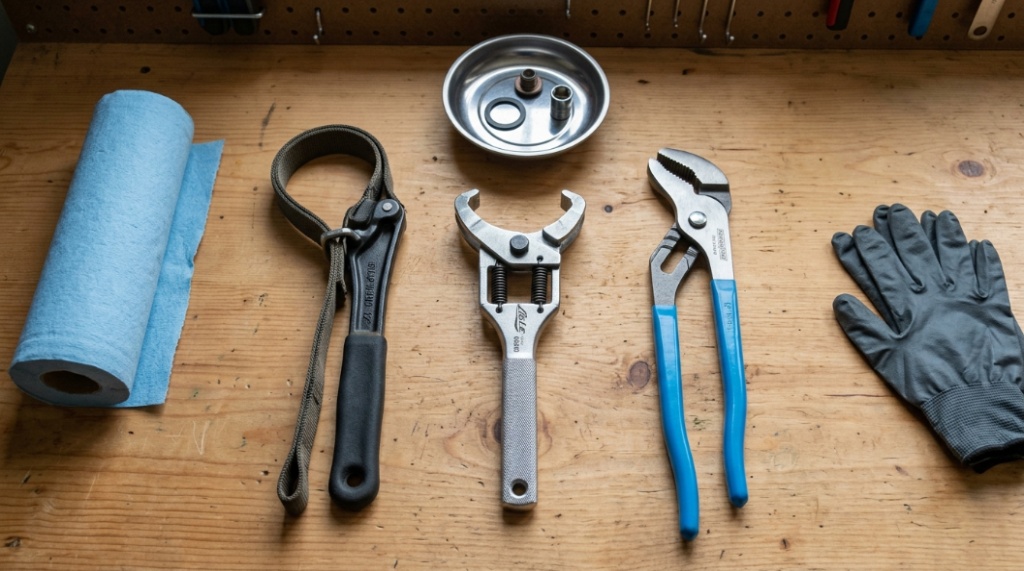
You need proper essential car tools like an oil filter wrench, gloves, and possibly a breaker bar to safely remove a stuck filter.
Basic mechanic tools list for this job
- Oil filter wrench (strap, cap, or chain type)
- Rubber gloves for grip
- Socket wrench or ratchet
- Breaker bar (for extra leverage)
- Screwdriver (last resort method)
- Drain pan
- Clean rag
Comparison: Types of oil filter wrenches
| Type | Best For | Pros | Cons |
|---|---|---|---|
| Strap Wrench | General use | Good grip, adjustable | May slip on very tight filters |
| Cap Wrench | Specific filter sizes | Precise fit, less slipping | Needs exact size match |
| Chain Wrench | Severely stuck filters | Maximum grip | Can crush filter body |
How do you remove a stuck oil filter step by step?
Start with hand removal, then move to a wrench, and increase force gradually while protecting the filter housing.
Step-by-step process
1. Turn off engine and let it cool
Never attempt removal on a hot engine. Heat expands metal and increases resistance.
2. Try removing by hand first
Use gloves for better grip. Turn counterclockwise.
3. Use an oil filter wrench
Attach the wrench securely and apply steady pressure. Avoid jerking.
4. Increase leverage if needed
Use a breaker bar with controlled force. Do not overtwist.
5. Tap lightly if stuck
Gentle tapping can break the seal between gasket and engine.
6. Last resort: screwdriver method
Pierce the filter and use it as leverage—but only if replacement is guaranteed.
Can you remove a stuck oil filter without a wrench?
Yes, but only if it’s mildly stuck—using grip techniques or household tools.
Alternative methods
- Rubber band for extra grip
- Sandpaper wrapped around filter
- Cloth or rag for friction
- Using a belt as a strap wrench
These methods work best when the filter isn’t severely overtightened.
What mistakes should you avoid when removing a stuck oil filter?
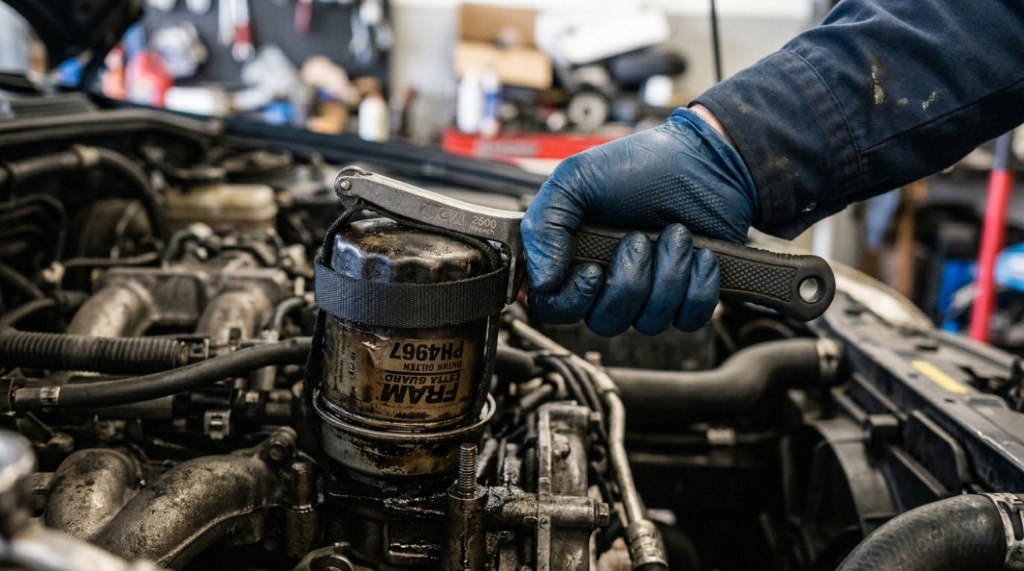
Avoid crushing the filter, using excessive force, or damaging engine threads.
Common mistakes
- Using sharp tools too early
- Applying uneven pressure
- Forcing removal at an angle
- Skipping proper tools
- Not draining oil first
Damage to the oil filter housing can lead to costly repairs exceeding $300–$800 depending on the vehicle.
How do you prevent an oil filter from getting stuck again?
Install the new filter correctly using light hand tightening and lubricated gasket.
Best practices
- Apply a thin layer of oil on the gasket
- Tighten by hand only (3/4 turn after contact)
- Do not use a wrench for installation
- Follow manufacturer torque guidelines
- Change oil regularly
This simple step reduces future sticking issues by over 70%.
Do professionals use different techniques?
Yes, professionals rely on precision tools and controlled torque rather than force.
Mechanics typically use:
- Torque-controlled tools
- High-quality cap wrenches
- Anti-seize techniques (when appropriate)
The key difference is consistency and correct tool usage—not strength.
Conclusion: Fix It Smart, Not Hard
A stuck oil filter isn’t a strength test—it’s a technique problem. The right essential car tools and a structured approach make all the difference.
Start simple. Increase force gradually. Avoid panic decisions like stabbing the filter too early. Most importantly, install your next filter correctly to prevent repeating the issue.
If you’re building your own mechanic tools list, prioritize quality oil filter wrenches—they save time, frustration, and potential engine damage.
Master this skill once, and every future oil change becomes faster, cleaner, and stress-free.
FAQ: Stuck Oil Filter Removal
Can a stuck oil filter damage the engine?
Yes. Improper removal can damage threads or housing, leading to leaks or engine issues.
How tight should an oil filter be?
Hand-tight plus a 3/4 turn is sufficient. Over-tightening causes future problems.
Is it safe to use a screwdriver to remove a stuck filter?
Only as a last resort. It can damage the filter housing if done incorrectly.
Why does my oil filter keep getting stuck?
Likely due to overtightening or installing without lubricating the gasket.
Can heat help loosen a stuck oil filter?
Yes, slight warmth can expand metal and loosen grip—but avoid working on a hot engine.
What is the best oil filter wrench type?
Cap wrenches are best for precision, while strap wrenches offer versatility.
Should I replace the oil filter every oil change?
Yes. Replacing the filter ensures proper oil flow and engine protection.
📌 Related Reads
👉 Don’t miss avoid these common car hire pitfalls
👉 Check this guide: five considerations before buying a used van