
If you’ve ever wrestled with a tangled garden hose, chased a leaky connector, or watched water pool uselessly on the pavement because you couldn’t reach the spigot, you already know the frustration. But here’s the bigger issue: those everyday hose hassles aren’t just annoying—they’re wasting water. Every kink, every drip, every over-spray adds up. The good news? The solution isn’t a complicated irrigation overhaul. A water saving retractable hose reel can transform how you water, making the process quicker, cleaner, and far more efficient. In this guide, we’ll break down exactly how these systems conserve water, what to look for when buying one, and how to get the most out of your setup without wasting a drop.
Key Takeaways
- A retractable hose reel reduces water waste by eliminating kinks, preventing leaks, and letting you control water flow instantly at the hose nozzle.
- Automatic rewinding protects the hose from UV damage and prolongs its life, which means fewer replacements and less resource consumption over time.
- Choosing the right hose length and material is critical for both water pressure and durability—especially in hot or cold climates.
- Pairing your reel with a shut-off valve, nozzle, and proper storage routine can slash outdoor water usage by a significant margin.
- Even a well-designed reel won’t save water if you’re watering at the wrong time of day or ignoring soil moisture levels.
Why Your Current Hose Routine Is Wasting Water
Before we dive into the solution, it helps to understand the problem. A standard garden hose that’s left coiled on the ground or draped over a fence is prone to several inefficiencies. First, there are kinks. A kinked hose doesn’t just stop water flow; when it suddenly releases, it can cause a burst of water that overshoots the intended target, soaking driveways and fences. Second, traditional hose fittings often leak at the connection point to the spigot. That slow drip might seem minor, but over a season, it amounts to dozens of gallons lost. Finally, dragging a hose around means you frequently stop and start watering while adjusting the line, which often leaves the water running while you reposition yourself.
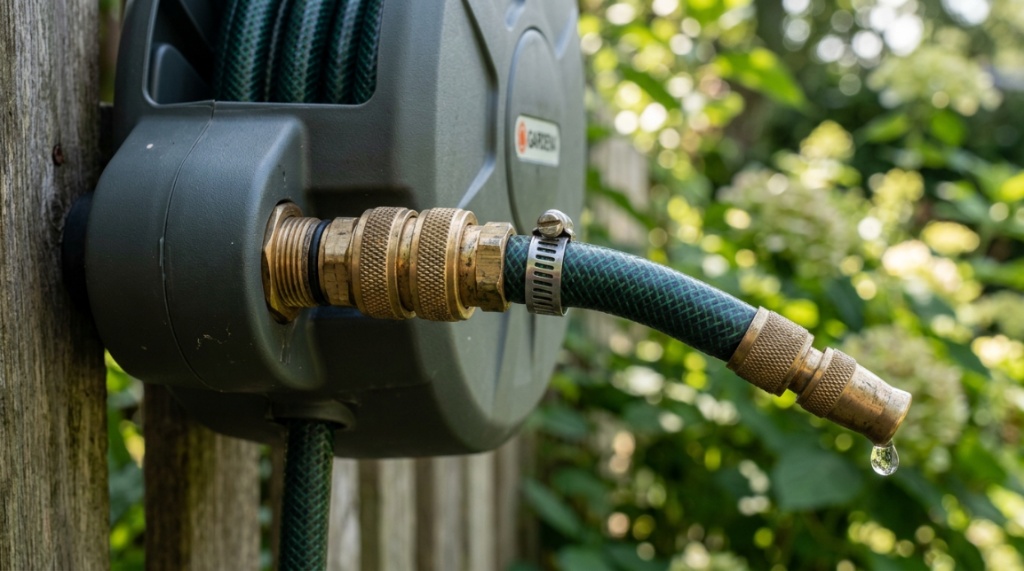
A water saving retractable hose reel addresses these core inefficiencies directly. It does not require you to manually coil the hose, which prevents twists and kinks from forming in the first place. The reel’s locking mechanism also keeps the hose taut, so you’re not dragging excess slack across the yard. Less dragging means less accidental over-spray. And because the hose retracts neatly into a protective casing, the connections stay cleaner and more secure, reducing the chance of leaks.
How a Retractable Hose Reel Saves Water in Practice
Let’s break down the actual mechanics of water conservation with these systems. It isn’t just about convenience; it’s about control and precision.
Eliminating Kinks and Bursts
Kinks are the number one enemy of water efficiency. When a hose kinks, you often have to walk back to the spigot to turn the water off, or you leave it running while you untangle the mess. A retractable reel keeps the hose straight and flat as it pays out. The internal spring mechanism maintains even tension, so the hose doesn’t fold over on itself. This means water flows consistently to the nozzle without sudden pressure spikes or interruptions. You use exactly the water you need, exactly where you point it.
Instant Shut-Off at the Nozzle
Many retractable hoses are paired with high-quality nozzles that include a trigger shut-off. This is arguably the single biggest water-saving feature. In a traditional setup, you might need to run back to the faucet to turn off the water when moving between flower beds. With a trigger nozzle, you just release your thumb, and the water stops immediately. This simple action can save several gallons per minute during a 20-minute watering session. When used consistently, this manual control is the definition of a water saving retractable hose reel advantage.
Preventing Leaks at the Connection
Leaks often occur because of stress on the hose fittings. When a hose is dragged over sharp corners or pulled tight around plants, the connectors loosen over time. Retractable reels mount securely to a wall or post, keeping the connection point stable. The hose pays out from the reel rather than yanking on the faucet. This stability maintains the integrity of the rubber washers and brass fittings, which means fewer drips and a more secure seal.
Choosing the Right Reel for Maximum Efficiency
Not all retractable reels are created equal. To truly save water, you need a system that fits your yard size and your watering habits. Here are the key decisions you’ll face.
Wall-Mounted vs. Freestanding
Wall-mounted reels are the most common and are ideal if you have a solid fence, wall, or post near your main watering zone. They keep the hose off the ground and make the retraction process smooth and fast. Freestanding reels are better if you have a large yard with multiple watering zones that are far apart. They are portable, allowing you to move the water source closer to the garden, which reduces hose drag and water pressure loss over long distances.
Hose Length and Water Pressure
This is where many people make an efficiency mistake. They buy the longest hose available, thinking it offers more flexibility. However, longer hoses reduce water pressure at the nozzle because of friction loss. A 100-foot hose will have significantly lower pressure than a 50-foot hose from the same faucet. To save water, choose the shortest hose that comfortably reaches your farthest watering spot. If you have a small courtyard or patio garden, a 50-foot hose is often more than enough. Using a shorter hose means faster watering and less water sitting idle in the hose line, For a complete outdoor transformation while keeping your utility costs down, check out our guide on Planning a budget garden makeover.
Material and Durability
Hose material affects how long the hose lasts and how it performs in different temperatures. Standard vinyl hoses are lightweight and cheap but tend to kink and degrade faster under UV light. Hybrid polymer hoses are a better choice; they are more flexible, resist kinking, and withstand hot sun without cracking. If you live in a region with freezing winters, you’ll want a hose that remains flexible in cold weather so you don’t risk cracking the line and causing a hidden leak.
Step-by-Step: How to Install and Use a Retractable Reel
Getting the most out of your reel is about smart setup and daily habits. Follow these steps to minimize water runoff and maximize efficiency.
- Position the reel strategically: Mount it so the hose can reach your primary watering areas without bending around corners. Ideally, you want a straight shot to most of your plants.
- Install a shut-off valve at the faucet: This allows you to stop water flow at the source without running back and forth, especially when the reel is not in use.
- Pull out only the length you need: Pull the hose to the length required for the specific task. Don’t pull out the entire 75 feet if you’re watering a single planter. Less hose on the ground means less water residue and less chance of tripping or snagging.
- Use a trigger nozzle with a lock: Use the trigger for controlled bursts. Use the lock feature only when you need continuous, steady water flow, such as filling a rain barrel or a large pot.
- Retract while walking back: When you’re finished, guide the hose as it retracts to avoid tangling. This ensures the hose is stored properly for the next use.
Common Mistakes That Sabotage Water Efficiency
Even with a top-tier reel, certain habits can undo your water-saving efforts. Here’s what to avoid.
Watering on a Fixed Schedule
Your plants don’t need water just because the calendar says Tuesday. Watering on autopilot often leads to overwatering, which runs off the soil and is wasted. Instead, check the top two inches of soil with your finger. If it’s dry, water. If it’s moist, skip the task and tuck the hose back on the reel. The convenience of a retractable reel makes this “as-needed” approach much less tedious.
Ignoring Local Water Restrictions
Many municipalities impose watering restrictions during dry seasons. A retractable reel makes it easier to water early in the morning or late in the evening when evaporation rates are lowest. If you have specific watering days, ensure your reel is mounted in a location where you can easily adhere to those time windows.
Neglecting Nozzle Maintenance
Mineral deposits from hard water can clog the tiny holes in a spray nozzle over time. A clogged nozzle causes uneven spraying, which wastes water by creating a mist that evaporates before hitting the soil. Keep your nozzle clean by soaking it in vinegar every few months. This simple step ensures you’re delivering a solid stream of water where it counts—at the roots.
Measuring the Real Impact on Your Water Bill
Can a retractable hose reel actually lower your water bill? The answer depends on your previous habits. If you were leaving the hose running while moving around, or dealing with a persistent leak, the savings can be substantial. Let’s look at a practical example. A standard garden hose can flow at about 10 gallons per minute. If you reduced your watering time by just 5 minutes per session because you no longer waste time untangling a hose, and you water three times a week, that saves 150 gallons per week. Over a 30-week growing season, that’s 4,500 gallons. In many regions, this translates to a noticeable reduction in your outdoor water usage, which is especially important in drought-prone areas like California. For those looking for a model specifically suited to high-heat, low-rainfall climates, you might want to read more about a water saving retractable hose reel that is built to withstand tough conditions.
Beyond the Reel: Additional Water-Saving Tips
To truly maximize your conservation efforts, pair your new reel with a few simple gardening practices. You don’t need an elaborate drip system to make a difference, but these tips will help you get the most out of every gallon.
- Water the roots, not the leaves: Foliage doesn’t need water; roots do. Using a watering wand with a gentle shower setting helps direct water to the soil base without overspray.
- Mulch around plants: A 2-inch layer of mulch slows evaporation, meaning the water you apply stays in the soil longer. This reduces the frequency of your watering sessions.
- Use a rain gauge: Don’t water right after a heavy storm. Monitor rainfall to adjust your manual watering schedule accordingly. A retractable reel makes it effortless to skip a session when nature does the work for you.
- Inspect for leaks seasonally: At the start of the season, check all fittings and washers for wear. Replacing a worn $2 washer can prevent a slow drip that would otherwise waste hundreds of gallons over the summer.
Frequently Asked Questions
Can a retractable hose reel fit any standard faucet?
Yes, most retractable reels come with standard 3/4-inch fittings that connect to typical outdoor spigots. If you have a smaller or metric-threaded faucet, you might need an adapter. Always check the product specifications before purchasing to ensure compatibility with your home’s plumbing.
Do retractable hoses handle high water pressure well?
Most quality reels are designed to handle standard household water pressure, which usually ranges from 40 to 80 psi. However, if your home has unusually high pressure, you should install a pressure regulator. Excess pressure can stress the internal seals of the reel and cause the hose to burst over time.
What is the typical lifespan of a retractable hose?
With proper care and storage, a quality retractable hose can last between 5 and 10 years. The key is to drain the hose completely before pulling it back into the reel for storage, especially before winter. Leaving water in the line can cause freezing and cracking in colder climates.
Are retractable reels difficult to mount?
Not at all. Wall-mounted models typically require just four screws and a drill. Ensure you anchor the reel into a solid surface—a wooden fence or a concrete wall works best. If mounting into drywall, use appropriate wall anchors to ensure the weight of the hose doesn’t pull the reel down.
Is it worth buying a heavy-duty reel for a small garden?
If you have a small postage-stamp yard, a heavy-duty model might be overkill and could actually be a hindrance because the hose is often thicker and stiffer. A lighter-duty model with a 50-foot hose is usually more suitable and easier to handle in tight spaces. Match the reel size to your garden’s footprint, not the maximum size available.
Conclusion
Saving water doesn’t require a complete overhaul of your garden irrigation system. Sometimes, it just requires smarter tools and better habits. A retractable hose reel is one of the most effective upgrades you can make because it tackles the small inefficiencies—kinks, leaks, and spills—that add up so quickly in a hot season. By choosing the right length, maintaining your nozzle, and paying attention to how you pull the hose out, you can significantly reduce your outdoor water consumption.
Ready to make the switch? Look for a reel that fits your space, select a hose that matches your climate, and commit to watering only when your plants truly need it. Your water bill—and the environment—will thank you. Start with a small change today, and you’ll likely see that once you use a retractable reel, you’ll never want to wrestle with a tangled hose again.