
A normal warehouse shift at a builders’ merchant starts early and continues throughout the day. Here we set out what typically occurs during the day of a warehouse shift in a builders’ merchant trade counter, from opening to close of business.
Early arrival and vehicle checks
Pre-shift checks typically take place on the warehouse vehicles prior to the start of the shift. Selco staff who work in a warehouse may start their day as early as 6.30am or 7am in order to complete the various checks that need to take place prior to the yard opening. These include checks on the tires, brakes and warning lights of vehicles such as forklifts and reach trucks, as well as checks to ensure that the batteries are fully charged. Additionally, any damage to vehicles from the previous day’s activities will need to have been reported and dealt with prior to use.
The morning briefing
After having checked all vehicles, supervisors then hold a short briefing before opening time to explain which department staff members will be working in and what deliveries are expected to arrive on the day. They also explain any stock issues left over from the previous day’s shift, for example, if a line is running low or if there are any damaged pallets that need to be processed. Short-staffing on the warehouse can also be clarified within this meeting as warehouse staff are also responsible for running the trade counter and processing goods-in arrivals.
Opening the yard and trade counter
As staff finish the briefing, they start to set up the warehouse yard and trade counter. This includes sorting out the online orders that are due for collection during the morning, and getting them set up near the respective collection point, rather than having them scattered around the warehouse. It’s a good idea to get this sorted before opening up, as once customers start to arrive, it can end up being a lot of back-and-forth for staff.
The mid-morning rush

The majority of trade customers visit the trade counter in the morning and typically arrive between 8am and 11am to collect materials to take to a building site. All orders are picked from the stockroom and checked against the order to ensure that all items have been retrieved. Orders are then loaded onto the customer’s vehicle. It is imperative that orders are loaded correctly to avoid a return journey to collect an incorrectly loaded order. For Selco Jobs, see BM Careers.
Lunch rotation and cover
When it comes to breaks, these can be staggered so as to mean that at any time there are people covering the trade counter and the yard. Thus one member of staff may go off for their lunch break at 12pm and another an hour later at 1pm. A supervisor will be able to account for where everyone is during the shift. The reason Selco jobs involve so many different tasks on a shift is that each member of staff could be covering the trade counter for an hour and then go back to driving a forklift.
Afternoon deliveries and restocking
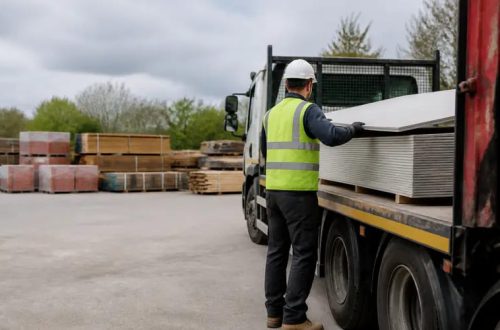
In the afternoon it is often a case of receiving deliveries of stock. Cement, Timber and Plasterboard products are typical examples of bulk, sometimes awkward items. The work involves offloading the pallets and checking against delivery notes for accuracy before putting the goods into storage, either on racking or in the open yard. Staff are expected to follow safe lifting techniques for heavy items. A reference for safe lifting techniques for heavy loads can be found on the British Safety Council web site.
End of day security checks
Staff lock high value stock such as power tools, fixings and closed bulk packs of plumbing materials in the cages, and count specific high value lines of stock to check for any loss during the day. Counting against the system at the end of each shift makes it straightforward to establish where any discrepancies against the previous shift’s figures arose, as opposed to discovering a discrepancy a week or so later.
Handover to the next shift
As the shift comes to an end the closing manager will conduct a handover of any outstanding issues with the rest of the warehouse staff, such as a delivery not arriving, customer orders yet to be collected or a forklift that requires minor repairs. This must be completed prior to departure so that the start of the next shift is not spent sorting out issues left by the previous shift.