





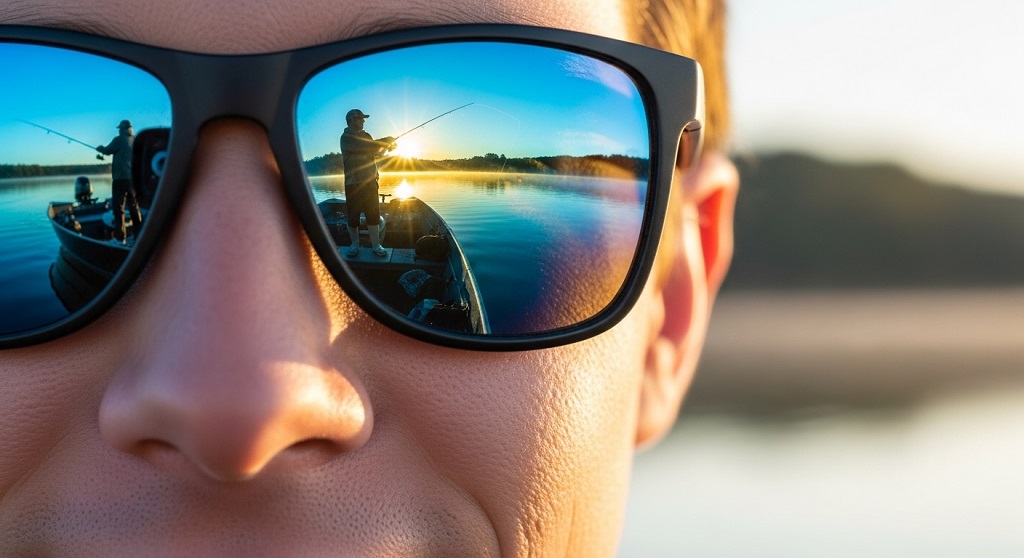
Polarized sunglasses help anglers catch more fish by reducing surface glare, improving underwater visibility, increasing contrast, and protecting eyes during long fishing sessions. When sunlight reflects off water, it creates glare that blocks your ability to see beneath the surface. Polarized lenses filter that glare, allowing you to detect fish movement, structure, weeds, and depth changes more clearly.
This visibility advantage directly improves casting accuracy, lure placement, and strike timing. According to fisheries visibility studies and angler field observations, improved underwater contrast increases fish spotting rates significantly in shallow-water environments such as flats, rivers, and shorelines.
If you fish without polarized sunglasses, you are essentially guessing where fish are. With them, you are making informed decisions based on what you actually see. That difference often determines whether you return home empty-handed or with a strong catch.
What Are Polarized Sunglasses and How Do They Help Fishing?
Polarized sunglasses help fishing by blocking horizontal light reflections from water, allowing anglers to see beneath the surface.
Water reflects sunlight horizontally. That reflection creates glare. Glare reduces visibility and hides fish, vegetation, drop-offs, and underwater structures.
Polarized lenses contain a special chemical filter aligned vertically. This filter blocks horizontal light waves while allowing vertical light to pass through. The result is clearer underwater vision.
For anglers, this clarity translates into practical advantages:
- Spot fish earlier
- Track lure movement accurately
- Identify structure and cover
- Avoid casting mistakes
- Reduce eye fatigue
Without polarization, even experienced anglers struggle to interpret what lies below the surface. With polarization, the water becomes readable.
Why Is Water Glare a Problem for Anglers?
Water glare hides fish movement and underwater structure, reducing reaction time and casting accuracy.
Glare is not just uncomfortable. It directly impacts fishing performance.
When sunlight reflects off the water surface, it creates a bright mirror-like layer. This reflection blocks visibility into the water column. As a result:
- Fish become harder to detect
- Lure tracking becomes difficult
- Strike timing gets delayed
- Structure identification becomes inaccurate
A field observation from shallow-water sight-fishing environments shows anglers using polarized lenses identify fish earlier than anglers without them. Early detection increases catch probability because positioning improves before the fish notices disturbance.
This difference becomes especially important in:
- Fly fishing
- Bass fishing
- Saltwater flats fishing
- River fishing
- Kayak fishing
In all these conditions, glare directly reduces catch efficiency.
How Do Polarized Sunglasses Help You See Fish Underwater?
Polarized sunglasses improve underwater contrast, making fish shapes, shadows, and movement easier to detect.
Fish are rarely visible as bright objects. Most appear as subtle shadows or movement patterns. Polarized lenses enhance contrast between fish and background terrain.
This contrast improvement helps anglers:
- Identify cruising fish
- Detect ambush predators
- Locate feeding activity
- Recognize schooling patterns
In clear-water environments, this visibility advantage becomes even more powerful. Anglers can watch fish react to lure presentation in real time and adjust techniques instantly.
That adjustment increases hook-up rates.
Do Polarized Sunglasses Improve Casting Accuracy?
Yes. Polarized sunglasses improve casting accuracy by revealing underwater targets and depth transitions.
Accurate casting depends on knowing where fish are holding. Polarized lenses allow anglers to see:
- Rock edges
- Drop-offs
- Weed lines
- Sandbars
- Submerged logs
These structures attract fish. When anglers can see them clearly, they can place lures precisely where fish are most likely to strike.
Precision casting reduces wasted casts and increases strike opportunities.
How Do Polarized Sunglasses Reduce Eye Fatigue During Fishing?
Polarized lenses reduce eye strain by filtering harsh reflected light from water surfaces.
Fishing often requires long hours under direct sunlight. Continuous glare exposure forces eyes to work harder.
This leads to:
- Headaches
- Reduced focus
- Slower reaction time
- Lower visual accuracy
Polarized sunglasses reduce this strain by stabilizing incoming light. Anglers remain alert longer and maintain visual sharpness throughout the day.
Longer focus equals more opportunities to detect subtle strikes.
Are Polarized Sunglasses Useful in Both Freshwater and Saltwater Fishing?
Yes. Polarized sunglasses improve visibility in both freshwater and saltwater environments.
Different fishing environments create different visibility challenges.
| Fishing Environment | Visibility Benefit |
|---|---|
| Freshwater lakes | See weed beds and bass cover |
| Rivers | Identify current seams and rocks |
| Saltwater flats | Spot cruising fish earlier |
| Coastal shorelines | Track bait movement |
| Kayak fishing | Detect shallow hazards |
Across all conditions, glare reduction improves fishing decisions.
Which Lens Colors Work Best for Fishing?
Amber, copper, gray, and green lenses perform best for fishing visibility enhancement.
Each lens color serves a different purpose depending on water clarity and lighting conditions.
| Lens Color | Best Condition |
|---|---|
| Amber | Low light and rivers |
| Copper | Shallow freshwater |
| Gray | Bright open water |
| Green mirror | Offshore saltwater |
Choosing the correct lens color increases contrast and improves fish detection speed.
Can Polarized Sunglasses Help You Detect Fish Behavior?
Yes. Polarized sunglasses allow anglers to observe fish reactions to bait and movement patterns.
Behavior detection provides a tactical advantage.
Anglers can see:
- Following fish
- Spooked fish
- Feeding strikes
- Territorial movement
Recognizing these signals helps adjust lure speed, depth, and retrieval technique immediately.
This responsiveness increases catch success rates.
Do Professional Anglers Use Polarized Sunglasses?
Yes. Most professional anglers rely on polarized sunglasses for visibility and safety.
Tournament anglers prioritize underwater visibility because it improves efficiency.
Professional fishing strategies often depend on:
- Sight casting
- Structure targeting
- Bait tracking
- Strike timing
Without polarized lenses, these techniques become less reliable.
Industry surveys from competitive angling communities consistently show polarized eyewear as standard gear among experienced anglers.
Are Polarized Sunglasses Important for Fishing Safety?
Yes. Polarized sunglasses protect anglers from UV exposure and improve environmental awareness.
Fishing involves multiple visual hazards:
- Flying hooks
- Sharp lures
- Boat reflections
- Surface debris
Polarized lenses reduce glare and improve hazard detection.
They also block harmful UV rays that contribute to long-term eye damage.
Improved visibility increases reaction time in dynamic fishing conditions.
Do Polarized Sunglasses Increase Catch Rates?
Yes. Improved underwater visibility increases fish detection and casting precision, which improves catch rates.
Catch success depends on three factors:
- Seeing fish
- Understanding structure
- Timing strikes correctly
Polarized sunglasses support all three.
Anglers using polarization often report better performance in shallow water sight-fishing environments because visibility improves decision-making speed.
Better decisions lead to better results.
Conclusion: Are Polarized Sunglasses Worth It for Fishing?
Polarized sunglasses are not optional gear for serious anglers. They are a performance tool that improves underwater visibility, reduces glare, increases casting precision, and protects your eyes during long fishing sessions.
When you can see fish earlier, identify structure faster, and track lure movement clearly, your fishing strategy becomes more efficient. Instead of guessing, you react based on real visual information.
That advantage compounds over time. More accurate casts lead to more strikes. More strikes lead to more catches.
If you want to improve your fishing results without changing rods, reels, or lures, upgrading to quality polarized sunglasses is one of the most effective decisions you can make.
Choose the right lens color for your environment, wear them consistently, and watch your catch confidence increase on every trip.
FAQ: How Polarized Sunglasses Help Fishing
Do polarized sunglasses really help fishing?
Yes. Polarized sunglasses reduce water glare and improve underwater visibility, allowing anglers to detect fish, structure, and movement more easily.
Are polarized sunglasses necessary for bass fishing?
They are highly recommended because bass often stay near vegetation and structure that becomes easier to identify with glare reduction.
Which lens color is best for freshwater fishing?
Copper and amber lenses work best because they enhance contrast in shallow water and river environments.
Can polarized sunglasses help in cloudy weather?
Yes. They still reduce surface reflection and improve contrast even when sunlight is limited.
Do polarized sunglasses help with fly fishing?
Yes. Fly anglers rely heavily on sight casting, and polarization improves fish spotting accuracy in shallow water.
Are expensive polarized sunglasses better for fishing?
Higher-quality lenses usually provide clearer optics, better durability, and stronger UV protection, but even mid-range polarized lenses improve visibility significantly.
Can polarized sunglasses help reduce eye strain while fishing?
Yes. They reduce glare exposure, which lowers fatigue and helps maintain visual focus during long fishing sessions.
Read More AlsoThese Three Tips Can Help Craft Better
Discover More Outdoor Activities to Help you Keep Fit










+ There are no comments
Add yours